Charred Leek & Parma Ham Ballantine
A Restaurant-Style Starter from the
There’s something special about taking a humble vegetable and treating it with the same care and technique as a premium cut of meat. This charred leek and Parma ham ballantine is exactly that — a simple ingredient transformed into a refined dinner party starter packed with smoke, sweetness, texture, and elegance.
At the Winchester Cookery School, we love recipes that teach technique as much as flavour. This dish is a brilliant example of how layering cooking methods can elevate an inexpensive ingredient into something worthy of a restaurant tasting menu.
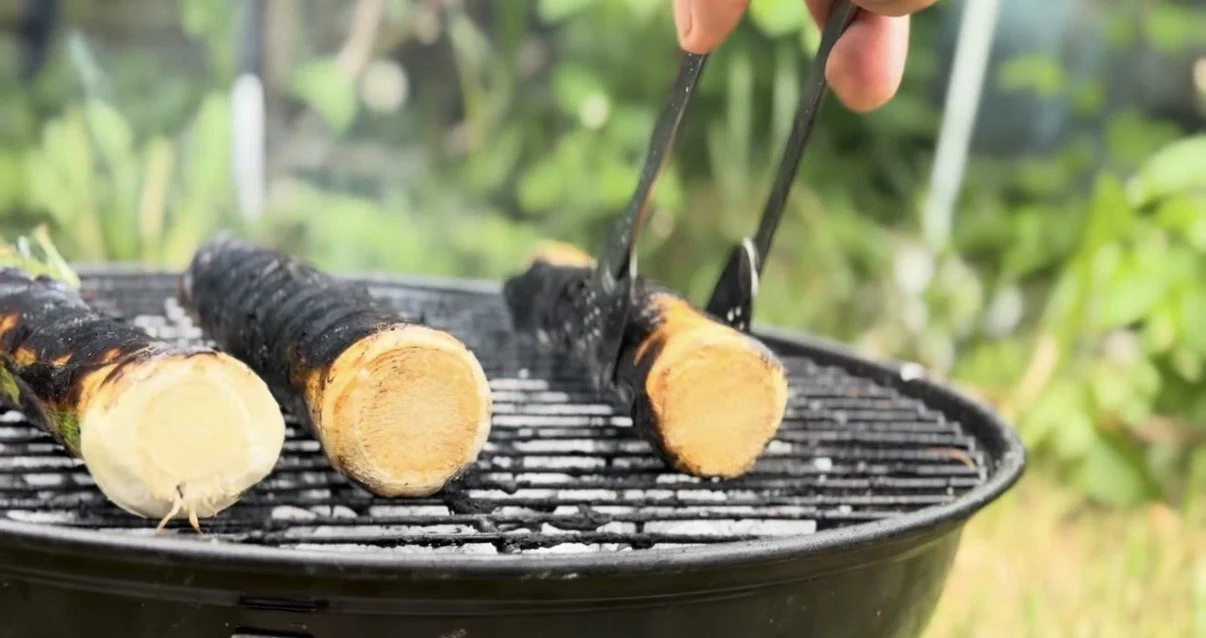
The leeks are first cooked directly over charcoal until the outer layers become blackened and smoky. Inside, the leek softens gently while absorbing the subtle flavour of the barbecue. The burnt exterior isn’t wasted either — the charred leaves are reserved to create a smoky ash breadcrumb and infused oil that bring even more depth to the finished dish.
Wrapped tightly in delicate Parma ham, poached until buttery soft, then sliced into elegant rounds, the finished ballantine becomes rich, silky, and beautifully savoury.
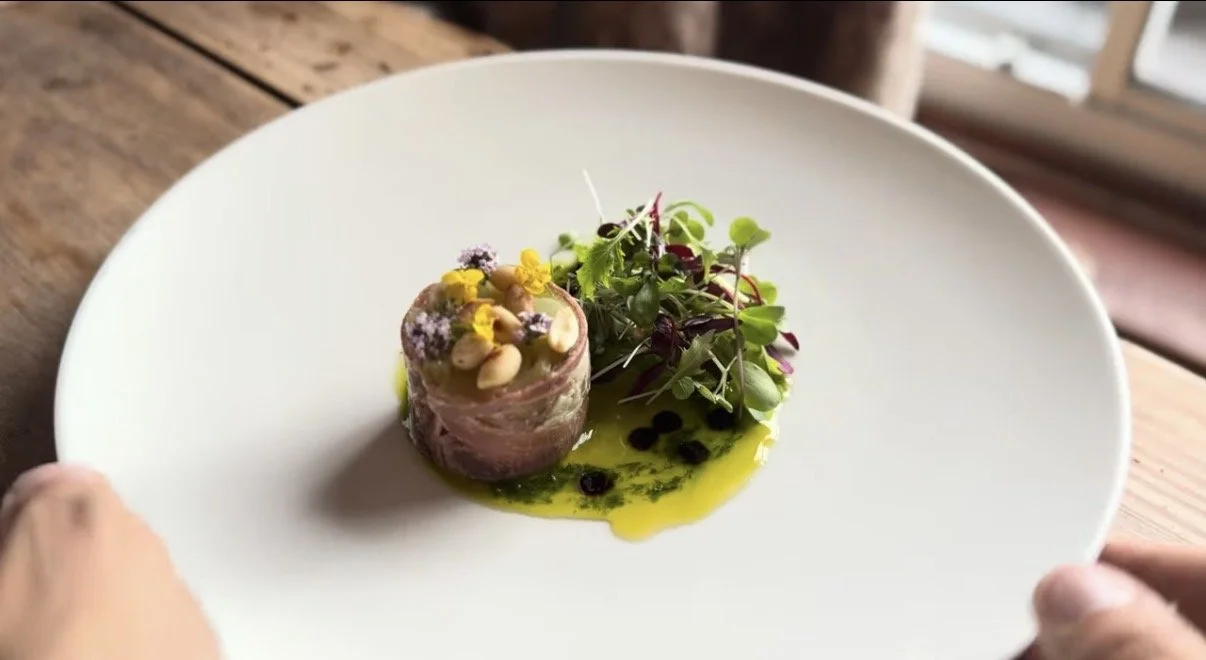
Served on a vibrant leek and charcoal oil, finished with truffle oil, toasted nuts, fresh herbs, and garden thyme flowers, this is a dish that looks high-end but costs very little to produce.
Ingredients
For the Ballantine
3 large quality leeks
4–5 slices Parma ham
Cling film
For the Charcoal Leek Oil
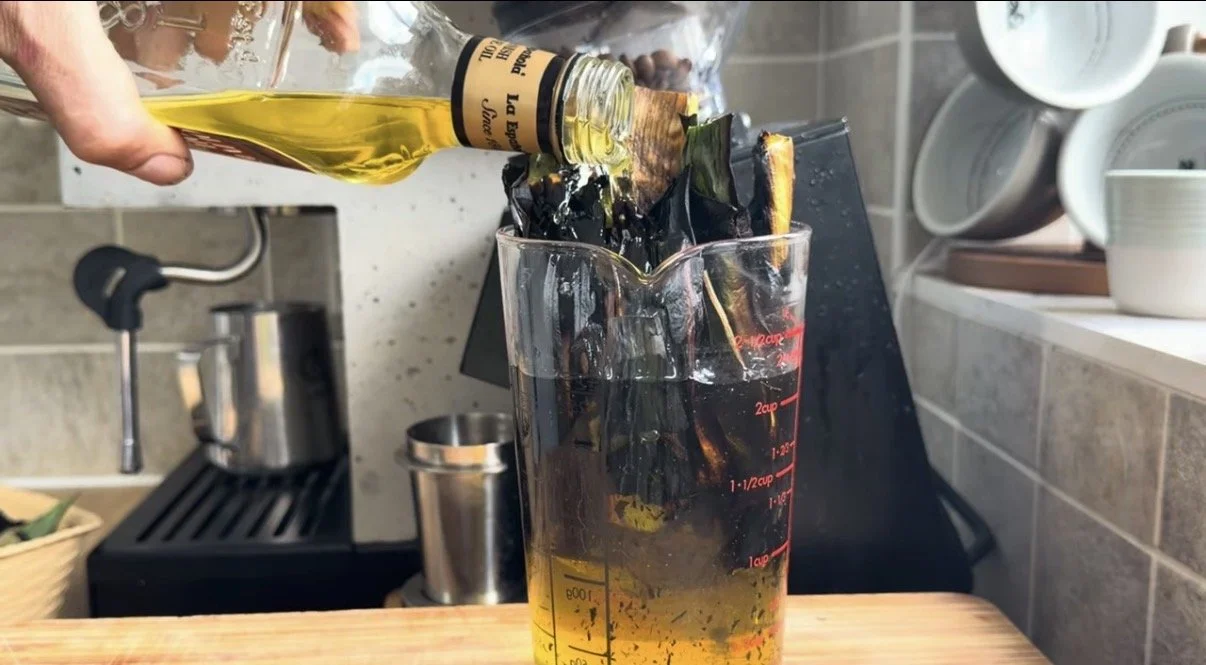
Reserved charred leek skins
Extra virgin olive oil
For the Green Leek Oil
Blanched green leek tops
2 garlic cloves
Salt and black pepper
Charcoal-infused olive oil
To Finish
Truffle oil
Micro herb salad
Roasted nuts
Fresh thyme flowers
Method
1. Char the Leeks
Wash the leeks thoroughly and place them directly onto a hot barbecue.
Cook until the outside becomes completely blackened and charred all the way around. This process gently steams and softens the centre while adding a deep smoky flavour.
Once cooked, carefully peel away the burnt outer layers. Reserve the charred skins for the charcoal oil and ash breadcrumb.
2. Create the Ballantine
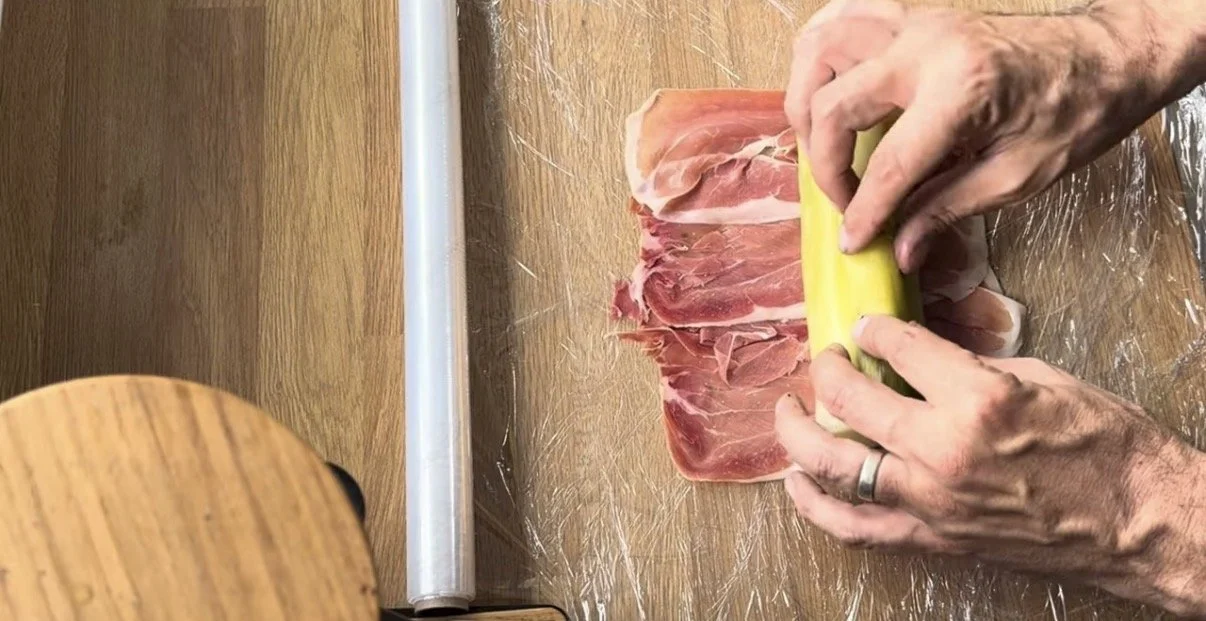
Lay a large sheet of cling film onto the work surface.
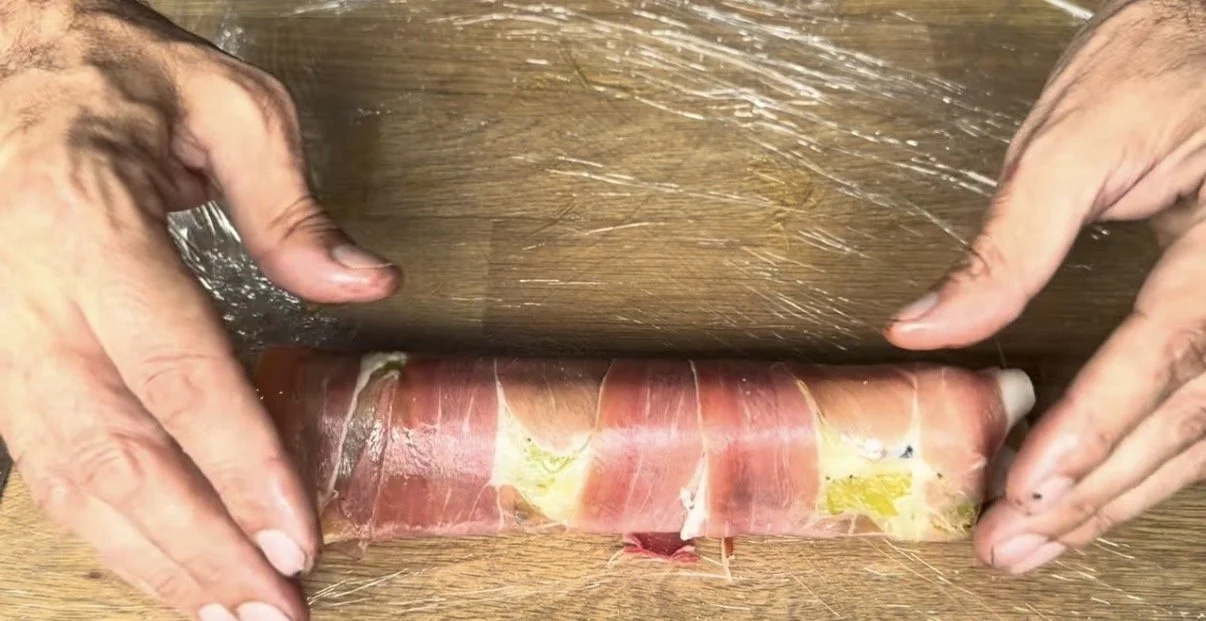
Slightly overlap the slices of Parma ham to create a rectangle. Place the three cooked leeks neatly across the centre and tightly roll everything together into a cylinder.
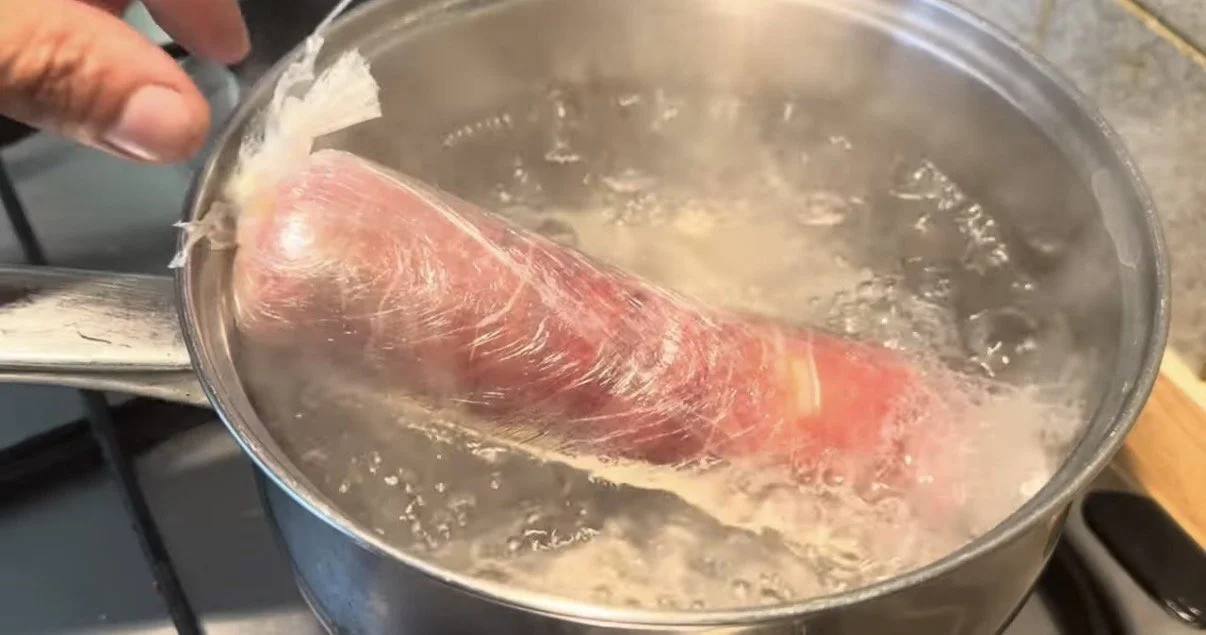
Twist the cling film tightly to compress the shape and tie the ends securely.
Poach gently in simmering water for 10–15 minutes. This softens the Parma ham, allows the leek to become buttery and tender, and helps the natural gelatinous texture develop.
Transfer to the fridge and chill overnight.
3. Make the Charcoal Oil
Place some of the reserved charred leek into extra virgin olive oil and leave overnight at room temperature to infuse.
The following day, strain the oil through a fine sieve or muslin cloth.
The result is a smoky, deeply savoury oil perfect for dressings, sauces, and finishing dishes.
4. Create the Green Leek Oil
Wash the green leek tops thoroughly.
Blanch in heavily salted boiling water until tender and vibrant green, then immediately refresh in ice water to preserve the colour.
Drain well and blend with:
2 garlic cloves
Salt
Pepper
The charcoal-infused olive oil
Blend until smooth and vibrant.
Plating the Dish
Spoon the vivid green leek oil onto the plate.
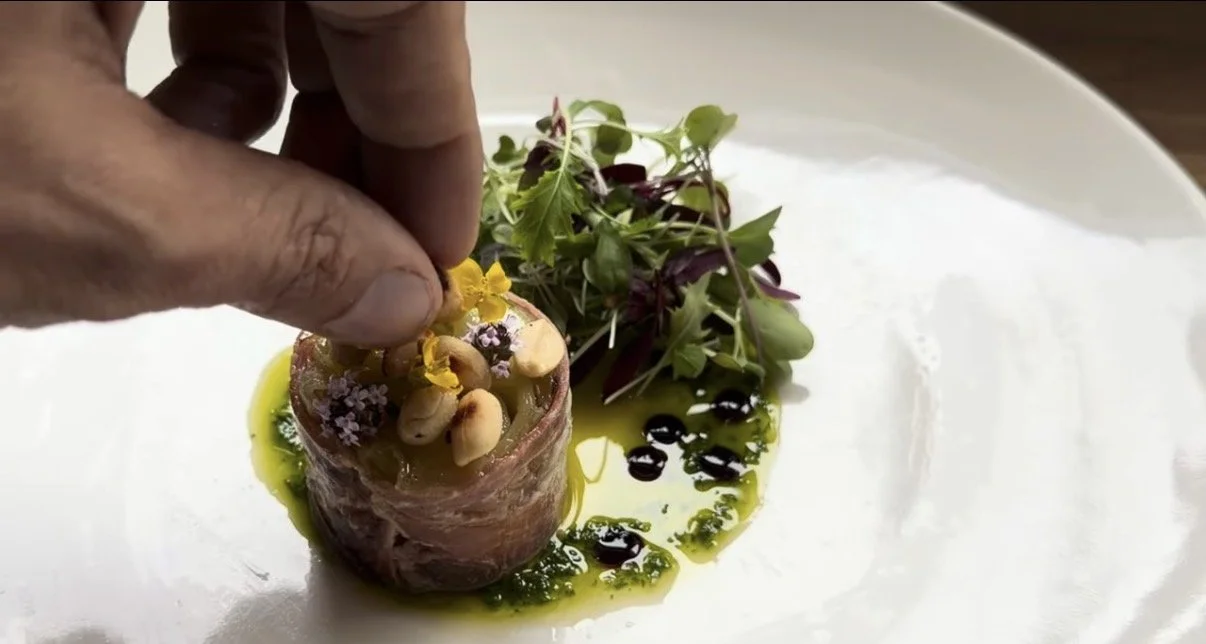
Slice the chilled leek and Parma ham ballantine into thick rounds and place carefully on top of the oil.
Finish with:
A drizzle of truffle oil
A small micro herb salad
Roasted nuts for texture
Fresh thyme flowers from the garden
The result is smoky, creamy, earthy, fresh, and incredibly elegant.
Chef’s Notes
This is the kind of dish that proves technique matters more than expensive ingredients.
Leeks are one of the most underrated vegetables in cooking. Charring them over fire develops sweetness and smokiness, while the Parma ham adds richness and seasoning without overpowering the delicate flavour of the leek itself.
It’s also a perfect example of modern cooking philosophy:
Minimal waste
Maximum flavour
Layered technique
Beautiful presentation
A brilliant starter for dinner parties, supper clubs, or restaurant menus — and one that costs next to nothing to make.
For more restaurant-style recipes, cooking techniques, and professional chef training, visit the Winchester Cookery School.